The ballroom glittered beneath hundreds of warm golden lights.
Music drifted through the elegant hall as couples moved slowly across the polished floor. The guests were dressed for the occasion—beautiful gowns, dark formal suits, sparkling jewelry—and everywhere there were conversations, laughter, and celebration.
Yet one young woman sat apart from the crowd.
Her name was Eliza.
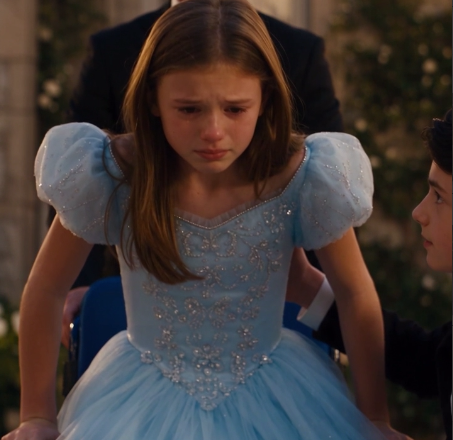
She wore a pale blue evening dress decorated with delicate pearls. Her long brown hair fell over her shoulders, but she paid no attention to how she looked.
Her eyes remained fixed on the dancers.
She had loved dancing since childhood.
For years, she had imagined what it would feel like to move with the music, turn beneath the lights, and forget everything else for a few minutes.
Then an accident had changed her life.
She had lost the ability to walk, and years of treatment had brought little progress. Her family had gradually learned to live with the painful reality that recovery might never come.
That evening, Eliza had agreed to attend the ball despite knowing she would spend most of it watching from the side.
Beside her stood Edward, the longtime family butler who had cared for her for years.
He had become far more than an employee.
He was one of the people Eliza trusted most.
Edward noticed the sadness in her expression.
“If you’ve had enough, we can leave whenever you want.”
Eliza shook her head.
“I want to stay.”
Then the music changed.
A quiet piano melody began to fill the room.
A young man approached.
He was dressed formally in a dark velvet jacket and light-colored vest. He stopped in front of Eliza and looked at her for a moment.
Then he offered his hand.
“Would you dance with me?”
Eliza stared at him.
She wasn’t sure whether he understood her situation.
“I can’t dance,” she said quietly.
Edward stepped forward.
“She isn’t able to walk.”
The young man nodded.
There was no awkwardness in his expression.
No pity.
He simply lowered himself so he was looking directly at Eliza.
“I didn’t ask you to walk.”
She looked confused.
“Then what are you asking?”
“For you to give it a try.”
Eliza hesitated.
“What if I can’t?”
“Then we stop.”
“And if I say no?”
He smiled.
“Then I’ll be disappointed.”
That answer made her laugh softly.
It was the first genuine smile Edward had seen from her that evening.
The young man offered his hand again.
“You don’t have to stand. Just take my hand.”
After several seconds, Eliza reached toward him.
Their hands met.
For a moment, nothing else seemed to matter.
He helped her lean forward carefully.
“There’s no hurry.”
Eliza took a breath.
She was frightened.
She tried to shift her weight.
Nothing happened.
Then she tried again.
Her foot moved.
Only slightly.
But it moved.
Eliza stared downward.
“I did that.”
The young man smiled.
“Yes, you did.”
Edward looked stunned.
He knew how hard the previous years had been. He also knew that one small movement did not mean Eliza could suddenly walk again.
But it was something they hadn’t seen in a long time.
A sign worth investigating.
Eliza tried once more.
Her foot moved again.
Tears filled her eyes.
Edward turned away for a moment, overwhelmed by emotion.
“Edward?”
He quickly wiped his face.
“I’m fine.”
“You’re crying.”
“Perhaps I’m allowed one tear.”
Eliza laughed.
That laugh mattered more to him than anything else that night.
The young man’s name was Noah.
He had only recently arrived in the city and knew nothing about Eliza’s history. He hadn’t approached her because he felt sorry for her.
He had simply seen someone sitting alone.
Someone who looked as though she wanted to be part of the celebration.
They spent the rest of the evening talking.
They didn’t dance.
But something more important had happened.
Eliza had discovered a reason to hope.
The following morning, her family contacted her doctors.
The unusual movement from the previous evening prompted another evaluation.
The results did not promise a miracle, but they revealed something encouraging: there were signs of neurological function that deserved further examination.
Her doctors explained that they could not predict exactly how much mobility she might regain.
But they believed a new rehabilitation program was worth pursuing.
For the first time in years, Eliza heard words that sounded different from the ones she had become accustomed to.
There may still be possibilities.
She made a decision.
“I want to try.”
And she did.
The progress was painfully slow.
At first, standing for a few seconds was an achievement.
Then came a single assisted step.
Eventually, she managed several.
Some days were encouraging.
Others were frustrating.
There were moments when Eliza wanted to quit.
Noah continued visiting her.
But he never asked when she would walk normally.
He never treated her progress like a deadline.
Instead, he asked a much simpler question.
“How are you today?”
Sometimes she answered, “Good.”
Sometimes she didn’t.
On difficult days, Noah would simply say:
“Then let’s let today be difficult. Tomorrow gets its own chance.”
Months became years.
Eliza kept working.
Little by little, she became stronger.
Two years after that unforgettable evening, she was able to walk independently.
Her steps were careful and sometimes unsteady.
But they were hers.
When she left the rehabilitation center after one of her final sessions, Noah was waiting outside.
He held out his hand.
Eliza smiled.
This time, she walked toward him.
Years later, another celebration was held in the same ballroom.
The golden lights were still there.
The music was still playing.
And once again, couples filled the dance floor.
But Eliza was no longer watching from the side.
She was standing beneath the lights.
Her dress was a soft shade of blue, reminiscent of the one she had worn on that first evening.
Across from her stood Noah.
He extended his hand.
“Would you like to dance?”
Eliza laughed.
“You’ve asked me that before.”
“I know.”
She took his hand.
“And this time,” she said, “I know how to answer.”
The music began.
Their first steps were slow.
Careful.
But they kept moving.
They danced.
Near the edge of the room stood Edward.
His hair had turned gray, and the years had changed his face, but his eyes were still the same.
A guest noticed his tears.
“Are you her father?”
Edward smiled.
“No.”
He looked toward Eliza.
“I was the man who spent many years trying to protect her.”
He paused.
“Eventually, I learned that protecting someone doesn’t always mean keeping them away from the world. Sometimes it means helping them find the courage to face it.”
After the dance, Eliza crossed the room toward him.
She embraced him.
“Do you remember that first night?”
Edward smiled.
“How could I forget?”
“You told us it was impossible.”
He laughed softly.
“I was wrong.”
Eliza looked at him.
“What do you believe now?”
Edward looked at her for a long moment.
“Sometimes ‘impossible’ only means that the answer hasn’t been found yet.”
Eliza hugged him again.
Later, as she and Noah prepared to leave, they passed the entrance where an old wheelchair had been placed.
Eliza stopped.
She looked at it quietly.
That chair had once represented everything she believed she could no longer have.
She didn’t hate it.
It had been part of her life.
But it no longer defined her.
Noah offered his hand.
Eliza smiled.
Then she shook her head.
“Let me walk.”
She took the first step herself.
Then another.
Noah stayed beside her without taking over.
He was there if she needed support.
But he let her choose every step.
Behind them, Edward watched from the doorway.
And as the couple disappeared into the evening, he quietly reflected on everything that had happened since that first dance invitation.
The most important change hadn’t been a single dramatic moment.
It had been the gradual return of hope.
A stranger had offered Eliza a hand.
That simple gesture had encouraged her to try.
Her doctors had found a reason to pursue rehabilitation.
She had worked for years.
And she had discovered that progress does not always arrive quickly—or in the way we imagine.
Sometimes it begins with something very small.
A question.
A hand extended without judgment.
A reason to try one more time.
And, occasionally, one small step is enough to begin an entirely different journey.
Years earlier, Noah had asked Eliza one simple question:
“Would you like to dance with me?”
She couldn’t answer then.
But eventually, she did.